Mostrando entradas con la etiqueta Natural Science 3º. Mostrar todas las entradas

15 de mayo de 2019

Taller de experimentos (Natural science)

Hemos estado estudiando las mezclas homogéneas y heterogéneas y diferentes técnicas para separarlas. (We have been studying in class homogeneous and heterogeneous mixtures and different ways to separate them.)

La semana pasada fuimos científicos durante una sesión y por grupos tuvimos que contestar "El minilibro del científico" por cada experimento que hicimos. (Last week, we have been scientists and in groups we answered the "Scientists minibook" in each experiment.)


Experiment 1: Clips bath (baño de clips)

Experiment 2: Salt water (agua salada)

Experiment 3: Wet rice (arroz mojado)

Experiment 4: Coloured honey and oil (miel y aceite coloreada)


3 de abril de 2019

UNIT 5: Matter and materials

We have been studing matter and materials during unit 5.

 Here you can watch a video about matter. Enjoy!


19 de enero de 2019

The 5 senses

THE 5 SENSES

We are learning about the 5 most important tools that humans have, the 5 senseS.

Click here to watch a little video about the 5 senses: 


1) SIGHT
  • Our eyes are the sense organs.
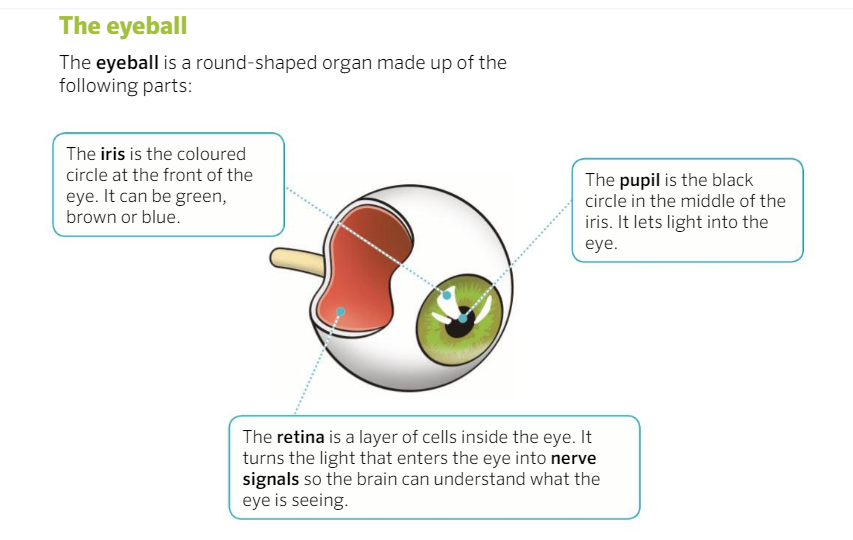
  • The eyeball is made up of 3 parts: pupil, iris and retina.


  • The eyeball is protected by 3 parts of our body: eyelids, eyelashes and eyebrows and lacrimal glands.


Click here to whatch a video: about how the human eye works:


2) HEARING

  • Ears are the sense organs.
  • Ear is divided in 3 parts: outer ear, middle ear and inner ear.


Click here to watch a video about how your ear works:


3)TOUCH 

  • Skin is the sense organ of touch.
  • Skin covers the whole body and protects the organs inside.


Click here to watch a video about how your skin works:


4) SMELL 
  • The sense organ of smell is the nose.
  • The olfactory bulb identifies different smells and sends information to the brain.
  • The nasal cavity has little hairs that help filter the air you breath in.
  • The nasal septum divides the nasal cavity into two parts.
  • Nostrils are 2 holes at the end of thenose where air comes in and goes out.
Click here to watch a video about how your nose works:


5) TASTE 

  • Our sense of taste allows us to identify different flavours.
  • The sense organ of taste is the tongue.
  • The tongue is covered in tiny bumps called taste buds.
  • These taste buds help us identify 4 basic tastes: sweet, salty, sour and bitter.

Click here to watch a video about how your tongue works: